How we dry vegetables instead of using preservatives
Why a cup with no preservatives keeps for up to 12 months: drying temperature, residual moisture, freeze-dried berries and three factory certifications.
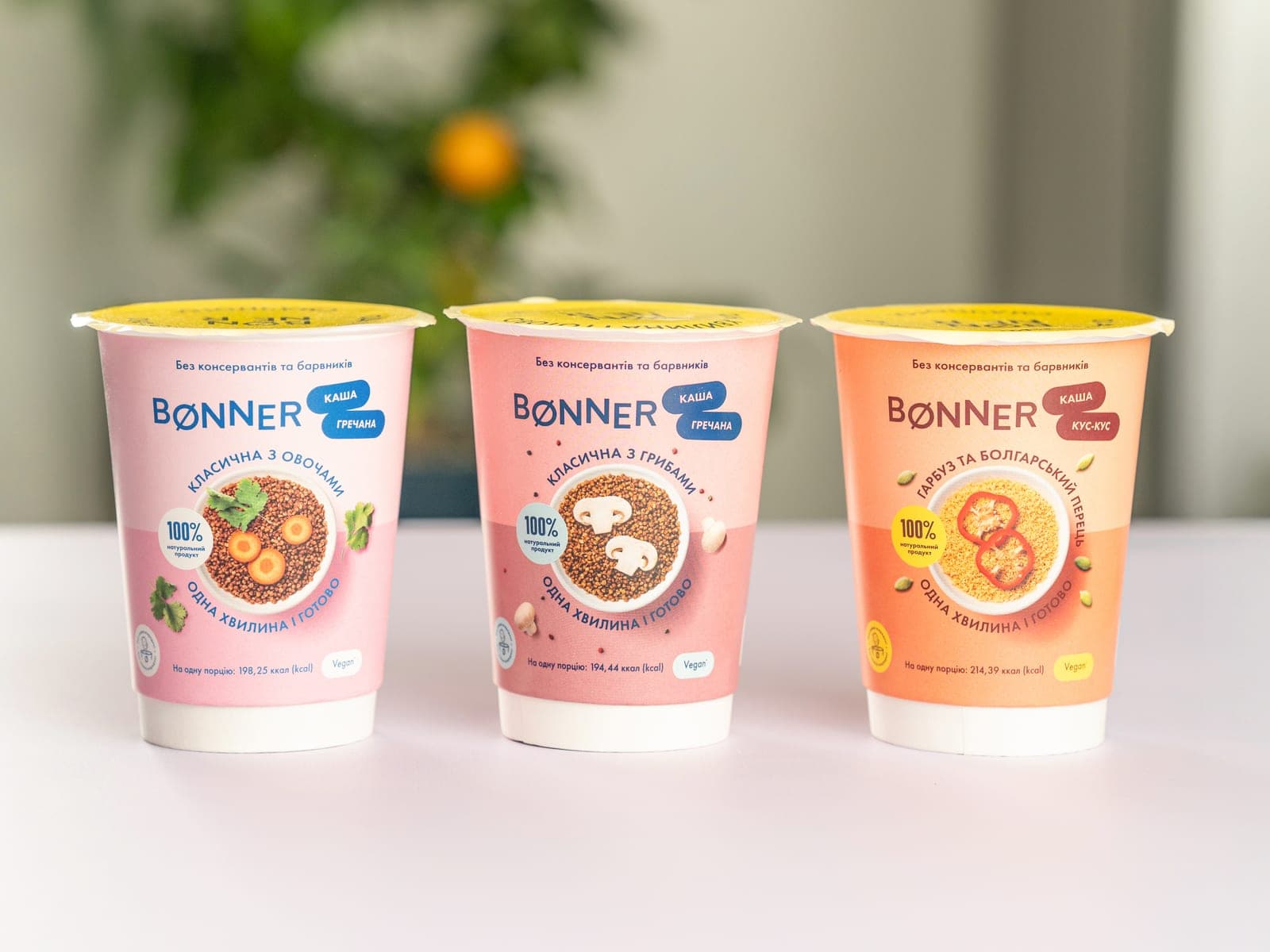
Every Bonner cup says “no preservatives”, and we are regularly asked how a soup with carrot and onion then sits on the shelf for a year. The short answer: bacteria, yeasts and moulds need water to live. We take it away — and there is nothing left to preserve the product against. The longer answer is below.
What happens to the vegetables
Carrot, onion, celery, parsnip and champignons arrive fresh at the Bio Products Factory in Chernihiv. They are washed, peeled and cut into identical cubes or slices — the size determines how evenly they dry. Then the vegetables go through convection dryers: a stream of warm air at 50–65 °C gradually draws out the moisture. The temperature is deliberately low: at 100 °C the vegetables would bake on the outside and stay raw inside, and some of the vitamins and aroma would leave with the steam. Drying one load takes 6 to 14 hours depending on the vegetable — onion is faster, root vegetables take longer.
The number that matters
We control not just “dry or not” but residual moisture: in finished vegetables it must be 6–8 %, in flakes and grains up to 12 %. At these values the water activity drops below the level at which microorganisms can multiply. It is the same physics that lets dried mushrooms or dried fruit keep for years without any additives. Every batch is checked in the laboratory before it goes to blending.
Berries and corn — freeze-drying
Strawberries, blueberries and corn lose their colour and shape under heat drying. So for them we use freeze-drying: the product is frozen, and then in a vacuum the ice turns straight into vapour, skipping the liquid stage. The berry keeps its shape and colour, retains up to 90 % of its vitamins and gets its juiciness back in a minute in hot water. This method is more expensive, which is why the ingredients list says “freeze-dried strawberry” but “dried carrot” — each ingredient gets its own method.
Why 6–12 months
Shelf life is determined by two things: moisture and fat. Overall, cups keep for 6 to 12 months depending on the recipe: legume purées, grains and vegetables — 12 months; the more nuts and seeds with plant oils in the recipe, the shorter the life, because fats oxidise over time even without microbes. The conditions on the pack are simple: a dry place, up to 25 °C and air humidity up to 75 %. An opened cup is best eaten the same day — the dry mix quickly draws moisture from the air.
Who checks this
The factory is certified to FSSC 22000 and ISO 22000 — international food safety standards that large producers in the EU work to. The HACCP system has been in place since 2018: every step from receiving raw materials to sealing the cup has a control point and a log. Auditors visit every year. So “no preservatives” is not marketing but a consequence of the water already having been taken out of the product — there is simply no need to add anything for storage.
Products from the article
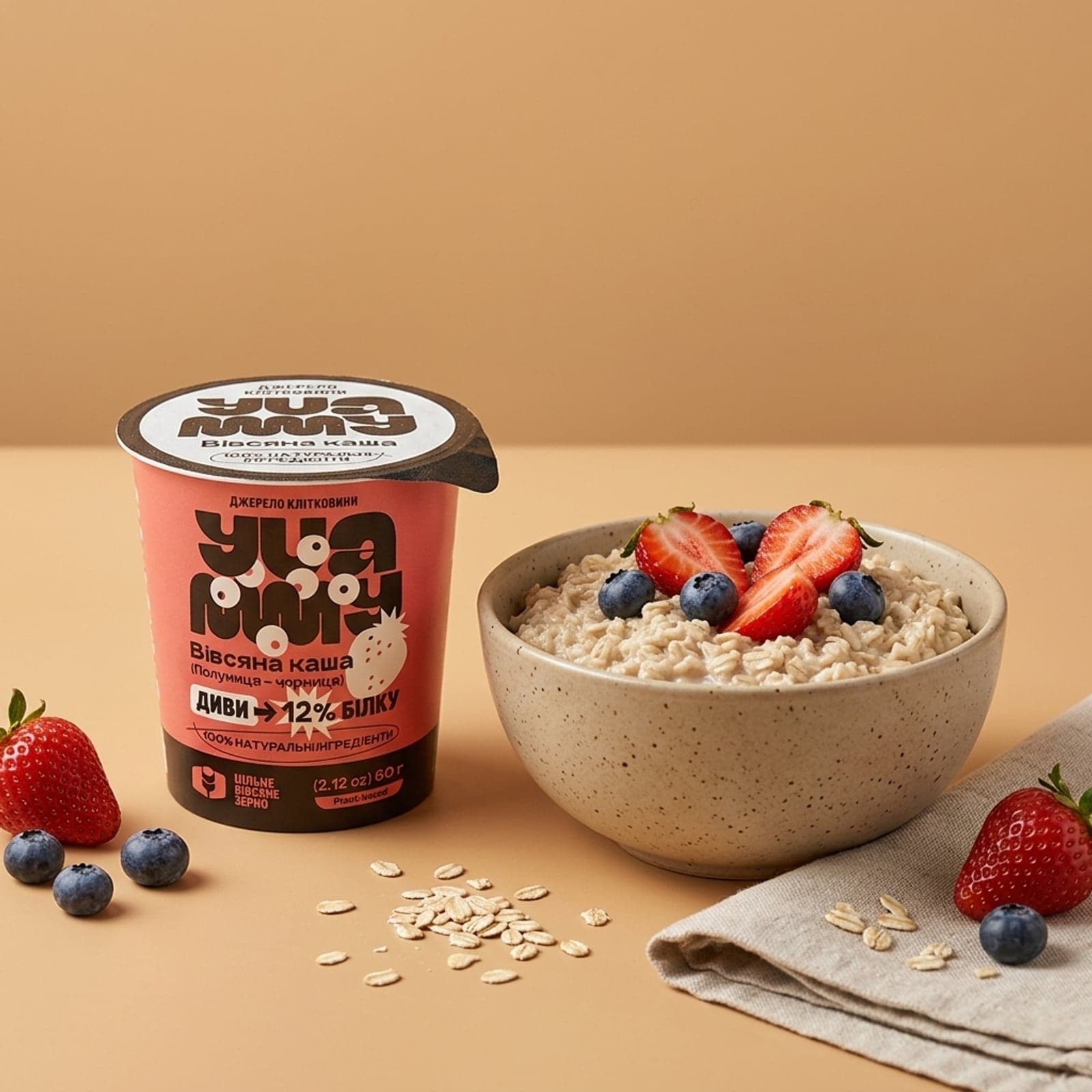
Strawberry-blueberry protein oatmeal
from 36.36 ₴/cup in a box of 30
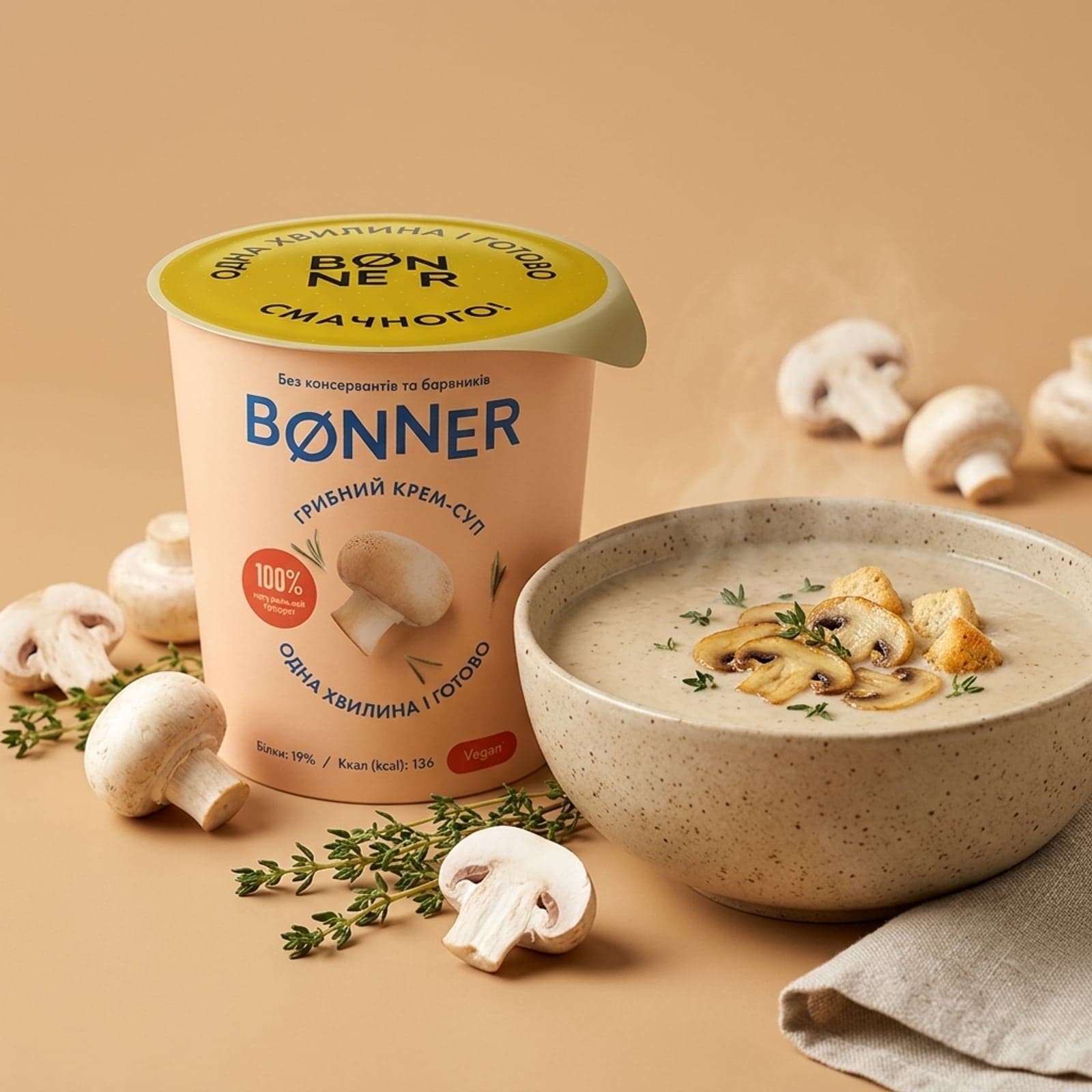
Mushroom cream soup
from 35.24 ₴/cup in a box of 30
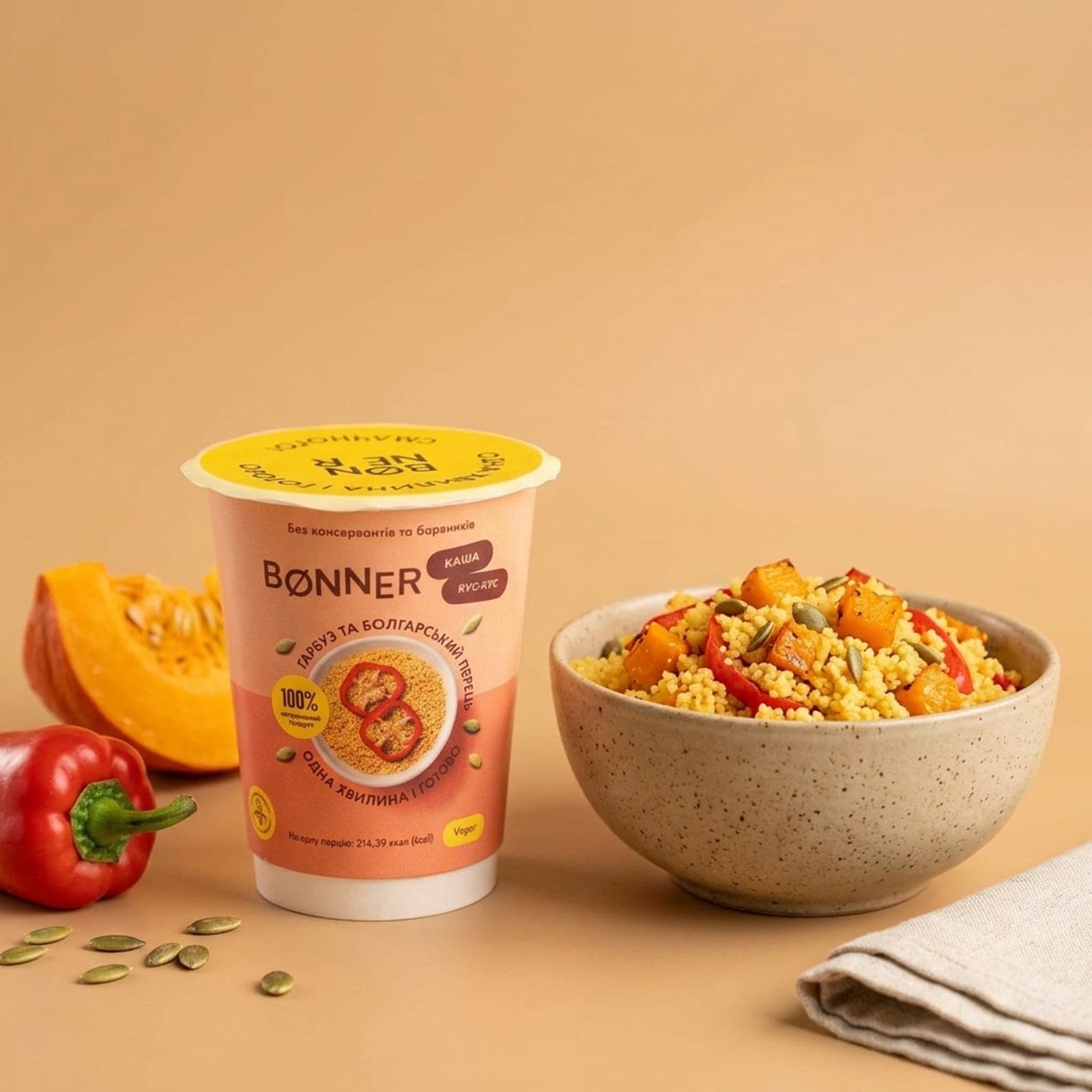
Couscous with pumpkin & bell pepper
from 37.03 ₴/cup in a box of 30